Blog
Migrating from a PBX or Centrex line, safely
What to inventory before migrating, the order of operations that protects your numbers, and why the deadline the French-language guides cite is not yours.
John · Owner and CEO · 2 min read · · updated
Moving off an on-premise switch or a Centrex line happens in three stages: inventory what exists, build the new system alongside it, then move the numbers last. The most expensive mistake is doing the third one first.
First, a deadline that does not exist here
Almost every French-language guide on this subject is built around la fin du RTC. That is real, and it is French. It refers to the incumbent carrier switching off the public switched telephone network in France, with announced dates.
There is no Quebec equivalent on that timetable. If a vendor is pressing you with a network shutdown date, ask which one, and in which country. Your reason to migrate may be excellent; that is not it.
The inventory nobody does
A phone system that has been in place for fifteen years contains things nobody documented. Before touching anything, write down:
- Every number, and what it does. There will be more than you think: the main line, the fax, the old accounts-department line, a toll-free number nobody cancelled.
- The forwards, especially any that end on someone's personal mobile. That is where the day-after surprises hide.
- The hunt groups: which number overflows to which, and in what order.
- The things that are not phones. Payment terminal, alarm panel, elevator, front door. These use an analogue line and do not migrate like an extension.
That last point is what sinks migrations. An elevator on an analogue line is not a desk phone: it is a safety device with its own rules, and it is handled separately, with whoever maintains it.
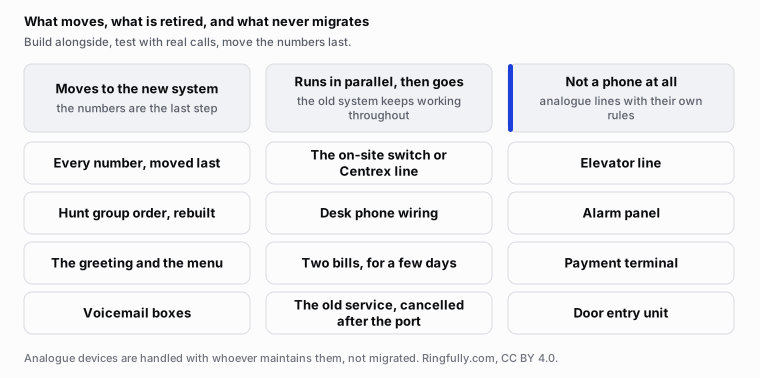
Three piles, not one list. The elevator, the alarm and the payment terminal are analogue lines and never migrate as extensions.
Reuse this figure anywhere, including commercially, with credit to Ringfully and a link back to this page. CC BY 4.0.
In what order should you migrate?
Build first, test second, move the numbers last. The numbers are the only irreversible part, so they go at the end.
- Build the new system alongside the old one. Temporary numbers, call flows built, staff trained, while the old system keeps running.
- Test with real calls, not just the greeting: a transfer, a queue overflow, a voicemail, an after-hours call.
- Move the numbers last, and cancel nothing until the port completes. A cancelled number returns to the pool and is not always recoverable: detail here.
You will pay two providers for a few days. That is the cost of not losing a number your customers have dialled for ten years.
The moment to take advantage of
A migration is the one occasion when everyone agrees to revisit routing. The seven-option menu inherited from 2011 does not have to be rebuilt exactly as it was.
It is also the right moment to check two specifically Quebec things: that the greeting satisfies the Charter, and that you know where your recordings end up. See Law 96 and where your call data lives.
What we do
We build the flow in advance, prepare the port with you, and cut nothing over until the numbers have arrived. There is no self-serve migration in the product: this is something we run with you. What Ringfully does is what you would be moving onto.
Questions people ask
- In what order should I migrate off a PBX or a Centrex line?
- Build the new system alongside the old one, test it with real calls, and move the numbers last. The numbers are the only irreversible part, which is why they go at the end. Cancel nothing until the port has completed.
- What should I inventory before migrating my phone system?
- Every number and what it does, every forward and especially any that end on a personal cell phone, the hunt groups and their order, and the things that are not phones at all. A payment terminal, an alarm panel, an elevator or a door entry unit sits on an analogue line and does not migrate like an extension.
- Is there a deadline to leave the old phone network in Quebec?
- No. The shutdown date the French-language guides are built around is the French network, announced by the incumbent carrier in France. There is no Quebec equivalent on that timetable. If a vendor is pressing you with a network shutdown date, ask which network and in which country.
- What happens to the elevator phone when we migrate?
- It is handled separately, with whoever maintains the elevator. An elevator line is a safety device under its own rules rather than a desk phone, and treating it as an extension is what sinks migrations. The same goes for an alarm panel and a payment terminal.
- Will we pay two providers during the migration?
- For a few days, yes. The old service has to stay active until the port completes, because a cancelled number returns to the pool and is not always recoverable. That overlap is the cost of not losing a number your customers have dialled for ten years.
About the author
John
Owner and CEO
Owner and CEO with over 10 years of experience in the IT industry, including more than 5 years specializing in VoIP and cloud communications. Experienced in designing, deploying, and supporting reliable communication solutions for businesses.

Keep reading
A free tool for this, in your browser: the phone cost comparator.
If you are leaving an on-premise system or a Centrex line, tell us what you have and when the contract ends, and we will lay out the order things have to happen in.