Blog
One number for sales, service and billing
How one published number reaches the right person for each kind of call, who decides that, and what happens when nobody on the team is free to answer.
John · Owner and CEO · 4 min read · · updated
One published number can reach different people because the first choice on your phone menu names a team, not a person, and each team is a short list of who may take that call. One person can sit in two teams, and billing can go first when it matters.
The menu names a team, not a person
The caller presses 1 for sales, 2 for service, 3 for billing. Each key points at a team you named, and a team is three things: who may take its calls, which calls go first, and what happens when nobody picks up in time.
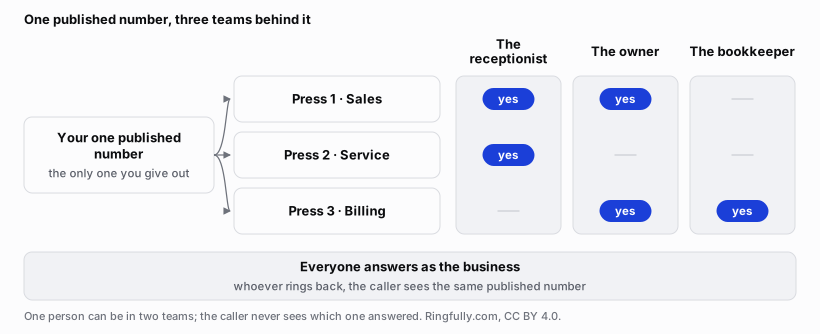
One number reaches three teams, one person can sit in two of them, and the caller never learns which team answered.
Reuse this figure anywhere, including commercially, with credit to Ringfully and a link back to this page. CC BY 4.0.
The menu never says “ring Marie”. It says “ring whoever is free in Sales”, and the person is chosen at the moment the call comes in. Marie can be at lunch, on another call or on holiday, and the key still works.
That is also why the caller sees the same one number on their display no matter who called them back. Every person answers as the business, not as themselves. The product page on teams and waiting shows what a team looks like once it is set up.
Who decides who is in which team?
You do, and it is a list of names. In a clinic, the receptionist is in Service and in Sales; the owner is in Sales and in Billing; the bookkeeper is in Billing only. One person in several teams is normal, not a workaround.
Language works the same way. A caller who chose French at the start is only ever offered to somebody who speaks it, because what each person can handle is written on the person once, and the team checks it before ringing anyone.
Teams are in every plan. Naming another one is a setting, not a second product with its own price, and there is no cap on how many you name. Underneath, each team is a named queue with required skills and a priority; the post on how calls find the right person in a small Quebec business walks through that mechanism if you want to check it.
Which calls go first
When two calls are waiting in different teams and one person could take either, the team you ranked higher is offered first. Billing before Sales, or the other way round: that is your call, and it is about the calls, not about jumping somebody’s turn at answering.
When nobody in the team picks up in time, the caller goes where you decided next: another team, the voicemail, a message and a goodbye. Nothing is dropped quietly.
Can a caller reach one person directly?
From inside the business, yes: a colleague dials her short internal number (a poste, as the office says) and she rings. From outside, the caller comes in through the team, and whoever picks up puts them on hold, checks that Marie is there, then hands the call over with an introduction. Marie answers knowing who is on the line and why.
That is the whole path to a person: through a team, then a hand-over, and the hand-over is the part most phone systems get wrong. There is no separate direct number to publish for each employee.
What we do, and what we do not
We route each call to a team you named, and from there to somebody in it who is free and who can handle it. You keep the lists; we keep the rules.
We do not guess who the caller wants from the number they call from. There is no lookup of a caller’s history to send them to “their” person; the caller picks a key, and the key picks the team.
There is no “ring my cell first” rule per person that skips the team. A person’s calls come through their team, whether they answer on the computer or have sent their calls to their cell phone.
And when nobody in the team is free, the caller waits or is rung back; we do not invent a fourth person. What that wait looks like from the caller’s side is in what happens to a call while everyone is busy.
Related reading: what a five-person team actually uses from call centre software, and what the category charges for that you never open.
Questions people ask
- Can one phone number reach sales, service and billing?
- Yes. The first choice on your phone menu names a team rather than a person, and each team is a short list of who may take that kind of call. The caller presses 1, 2 or 3, and whoever is free in that team is rung.
- Can one person be in more than one team?
- Yes, and it is normal rather than a workaround. In a clinic the receptionist can be in Service and in Sales while the bookkeeper is in Billing only. You keep the list of names, and the rules do the rest.
- Can a caller from outside reach one person directly?
- Not on a number of their own. From inside the business a colleague dials a short internal number, a poste, and it rings. From outside, the caller comes in through the team, and whoever answers puts them on hold, checks the colleague is there, and hands the call over with an introduction.
- Which call is answered first when two teams are waiting?
- The team you ranked higher. Priority is about the calls rather than the people: it decides which waiting call is offered next to somebody who could take either, and it does not take turns among the members of a team.
- Does the caller see a different number depending on who rings back?
- No. Everyone answers as the business, so the published number is what shows on the caller's display no matter who returned the call.
About the author
John
Owner and CEO
Owner and CEO with over 10 years of experience in the IT industry, including more than 5 years specializing in VoIP and cloud communications. Experienced in designing, deploying, and supporting reliable communication solutions for businesses.

Keep reading
A free tool for this, in your browser: the Erlang C calculator.
If calls ring out while everyone is with a customer, tell us how many people answer and what kinds of call come in, and we will set the teams up with you.