Blog
Building an auto-attendant callers stay on
A well-built phone menu runs a few seconds and offers three choices. How to structure one, and what the Charter of the French Language adds to it in Quebec.
John · Owner and CEO · 3 min read · · updated
An interactive voice response menu (an IVR, or auto-attendant) greets the caller and points them somewhere. Built well, it runs a few seconds and offers three choices. Built badly, it becomes the wall your customers hang up at.
Search the topic in French and everything you find is written for France. The mechanics are similar; the legal frame is not.
How many options should a phone menu have?
Three. A caller holds about three options in mind, and past that they stop listening and press zero, or hang up.
That constraint is useful: if your menu has seven choices, the question is not how to say them faster but which ones genuinely belong at the first level. Three doors that lead somewhere beat seven that lead to a second menu.
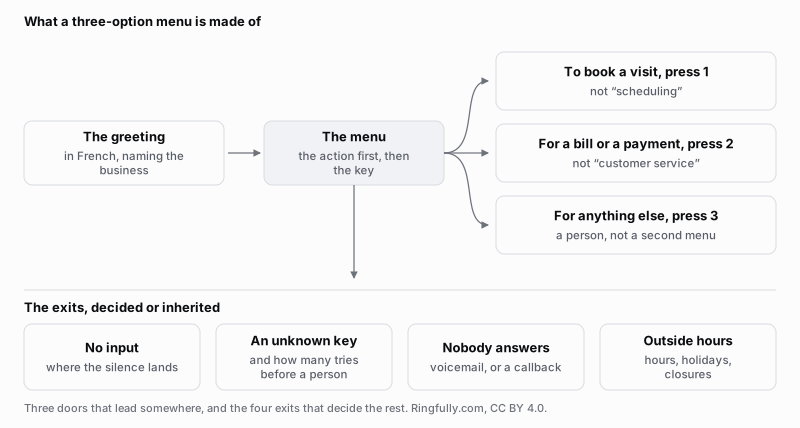
Three options a caller can hold in mind, the action named before the key, and the four exits that decide what happens when nobody presses and nobody answers.
Reuse this figure anywhere, including commercially, with credit to Ringfully and a link back to this page. CC BY 4.0.
A second level is not forbidden. It is just rarely necessary, and never worth a third.
Name the destination, not the department
"Press 2 for customer service" assumes the caller knows how you are organized. They do not.
"Press 2 for a bill or a payment" describes their problem instead. It is the same routing, and the caller gets it right the first time.
Should the key come before or after the option?
After. Say the action before the key: "for a bill, press 2." The reverse ("press 2 for a bill") makes someone hold a digit before they know what it is for, so they listen to the whole menu again.
What the Charter adds in Quebec
This is the part no French page will tell you, because it does not apply to them.
If you serve the public in Quebec, the greeting is in French. An option in another language is allowed, but it has to stay brief and say who can be served in it. The Office québécois de la langue française's model greeting for a centralized telephone service shows the order: French, one brief instruction for service in the other language, then French again. That is not a preference: it is the Charter of the French Language.
Two articles cover the detail: Law 96 and your phone system, and how long the English option may run.
A bilingual menu and a French-first menu are also not the same structure. See building a French-first IVR.
Plan for what happens when nobody answers
A menu assumes somebody picks up behind every key. Business hours, holidays and overflow are half the work, and they are the half that gets forgotten. Where a message goes when nobody picks up is in small-business voicemail, and the three honest destinations after closing are in after-hours call handling.
Quebec's holiday calendar is not the same list as the rest of Canada. See Quebec statutory holidays in call routing.
What we do
Ringfully's call-flow builder assembles these pieces visually: menus, hours, queues and transfers, with one flow per number, described on call menus and hours. We build it with you at setup, and you change it yourself afterwards.
One detail worth knowing if you record: the recording announcement is stored per organization, and it is spoken on the call. In always mode the caller hears it before being connected. In the agent's-choice mode it plays just after an agent starts recording rather than before, because until then nobody knows there will be a recording. Leave the field empty and nothing is said while the recording still runs. What a valid consent has to look like is set out in the Commission d'accès à l'information's conditions for a valid consent. The modes and the failure cases are set out on our recording policy page.
Questions people ask
- How many options should a phone menu have?
- Three. A caller holds about three in mind, and past that they stop listening and press zero or hang up. If your menu has seven, the question is which ones genuinely belong at the first level.
- Should I say the key before or after the option?
- After. Say the action first: for a bill, press 2. The reverse makes someone hold a digit before they know what it is for, so they listen to the whole menu again.
- What should each option be called?
- Name the destination the caller has in mind, not your internal department. Press 2 for a bill or a payment describes their problem; press 2 for customer service assumes they know how you are organized.
- Does a Quebec phone menu have to greet in French?
- If you serve the public in Quebec, yes. An option in another language is allowed, but it stays brief and says who can be served in it. That is the Charter of the French language, not a preference.
- Do I need a second level of menu?
- Rarely, and never a third. Three doors that lead somewhere beat seven that lead to another menu. A second level is not forbidden; it is usually a sign the first level is naming departments instead of problems.
About the author
John
Owner and CEO
Owner and CEO with over 10 years of experience in the IT industry, including more than 5 years specializing in VoIP and cloud communications. Experienced in designing, deploying, and supporting reliable communication solutions for businesses.

Keep reading
A free tool for this, in your browser: the phone menu builder.
If your phone menu sends people to the wrong place, or the wrong message plays after hours, describe what a caller hears today and we will tell you how we would set it up.