Blog
Small-business voicemail: where a message goes
What happens to a message left at a small business when nobody picks up, who is told about it, what the notice carries, and what the greeting should say.
John · Owner and CEO · 4 min read · · updated
A message left at a small business should reach the people who can act on it within a minute, as a notice with the caller's number and a way to listen, in one shared inbox for the company, not a mailbox per person that nobody checks.
Where does a voicemail message actually go?
In most systems the message lands in the mailbox of whoever's phone rang. If that person is off, in with a patient, or no longer works there, the message waits with them. The customer waits too, and has no idea why.
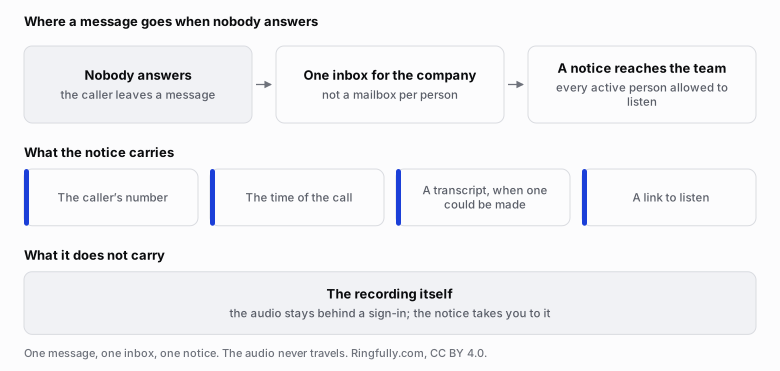
A message goes to one inbox for the company, and the notice about it carries a way to reach the audio rather than the audio itself.
Reuse this figure anywhere, including commercially, with credit to Ringfully and a link back to this page. CC BY 4.0.
In Ringfully, voicemail is one step in the phone menu you draw yourself, and there is only one of it: a single inbox for the company. A message belongs to the team, not to a person. Everyone allowed to listen sees the same list.
As soon as the recording ends, a notice reaches the team: every active person who has the right to listen to messages. That right is a box you tick in a role, and any person can take their name off the notices without losing access to the list.
What the notice carries, and what it does not
The notice carries the caller's number, the time of the call, a transcript when one could be made, and a link to listen. That is enough to decide in ten seconds whether to call back now or after the customer standing at the counter.
It does not carry the recording itself. The audio stays behind a sign-in to Ringfully; the notice takes you there, it does not transport it. A voicemail often holds a name, a number, sometimes the reason for a visit, and none of that needs to travel as an attachment.
The transcript is best-effort. It often arrives after the notice, it is sometimes incomplete, and sometimes there is none at all. The number and the link are always there. Deleting a message from the list also deletes the recording at the carrier.
Writing the greeting (French first, under ten seconds)
The greeting is optional: a bare tone is enough to record. But a caller who hears a tone without knowing where they are hangs up. Say who you are, what to leave, and what happens next. Nothing else. The Office québécois de la langue française publishes model greetings by type of organization built the same way.
« Vous avez joint la Clinique Dumas. Laissez votre nom et votre numéro, et on vous rappelle dès qu'on se libère. »
“You have reached Dumas Clinic. Leave your name and number and we will call you back as soon as we are free.”
French comes first. Law 96 applies to your phone system too, and a French-speaking caller should not sit through an English sentence to learn they are in the right place. If your menu asks for a language up front, keep one greeting per language rather than one bilingual greeting: each stays short.
A caller can speak for up to two minutes by default. That is plenty, and you can shorten it.
When voicemail is the wrong answer
Voicemail answers one question: “what do we do with the message?” It does not answer the caller's, which is usually “can someone deal with this now?”
During opening hours, when everyone is busy, a caller almost always prefers a callback to a machine. Offering a callback when the whole team is tied up keeps their place without keeping them on the line. Three ways to answer after closing weighs voicemail against forwarding to an outside number, for the emergency that cannot wait until morning.
Voicemail is the right choice for what is not urgent: an appointment to move, an invoice to discuss, a regular who knows you will call back.
What we do, and what we do not
Three limits are worth knowing before you start:
- There is no mailbox per person. A customer who wants to leave a message for Marie specifically leaves it with the company, and the team passes it on. For a small business that is the right default; for an office where each person has their own clients, it is a limit to know before you start.
- The transcript is not guaranteed. We do not wait for it before sending the notice, because waiting would sometimes mean sending nothing at all.
- The audio is never attached to the notice. You have to be signed in to listen. And the notice goes only to the people allowed to listen: remove that right from the role and the notice stops on its own.
Where voicemail sits in your menu, what greeting it plays and what happens before a caller gets there is all drawn in your menus and hours.
Related: what callers should hear the moment you close for a snow day.
Questions people ask
- Where does a voicemail message go?
- Into one shared inbox for the company, not into the mailbox of whoever's phone rang. Everyone allowed to listen sees the same list, so a message does not sit waiting with somebody who is off that day.
- Who is told when a message is left?
- Every active person who has the right to listen to messages, as soon as the recording ends. That right is a box ticked in a role, and anyone can take their name off the notices without losing access to the list.
- What does the notice contain?
- The caller's number, the time of the call, a transcript when one could be made, and a link to listen. It does not carry the audio: the recording stays behind a sign-in rather than travelling as an attachment.
- How long can a caller speak?
- Up to two minutes by default, and you can shorten it. The transcript is best effort: it often arrives after the notice, it is sometimes incomplete, and sometimes there is none at all.
- Can each person have their own voicemail box?
- No. There is one box for the company. A customer who wants to leave a message for one person leaves it with the business and the team passes it on. For a small business that is the right default; for an office where everyone has their own clients it is a limit to know first.
- What should the greeting say?
- Who you are, what to leave, and what happens next. French first, under ten seconds. A bare tone is enough to record a message, but a caller who hears a tone without knowing where they are hangs up.
About the author
John
Owner and CEO
Owner and CEO with over 10 years of experience in the IT industry, including more than 5 years specializing in VoIP and cloud communications. Experienced in designing, deploying, and supporting reliable communication solutions for businesses.

Keep reading
A free tool for this, in your browser: the phone menu builder.
If your phone menu sends people to the wrong place, or the wrong message plays after hours, describe what a caller hears today and we will tell you how we would set it up.